00

Marcel Bartumeu Ramentol

Marcel Bartumeu Ramentol

Technologist from Andorra. I simulate countries and cities, and build the tables and panels people use to test decisions on them.

THE FALL LINE · 23.5 KM · 2,846 M → 848 M

The fall line is the path water takes down a mountain, and the line I looked for through every course. This is the one on my grid of Andorra: the steepest way down, from the highest cell to the lowest.

01 CITY SCIENCE · FROM 2015 TO TODAY

From the summit to the lab

DRAG THE YEAR

2017

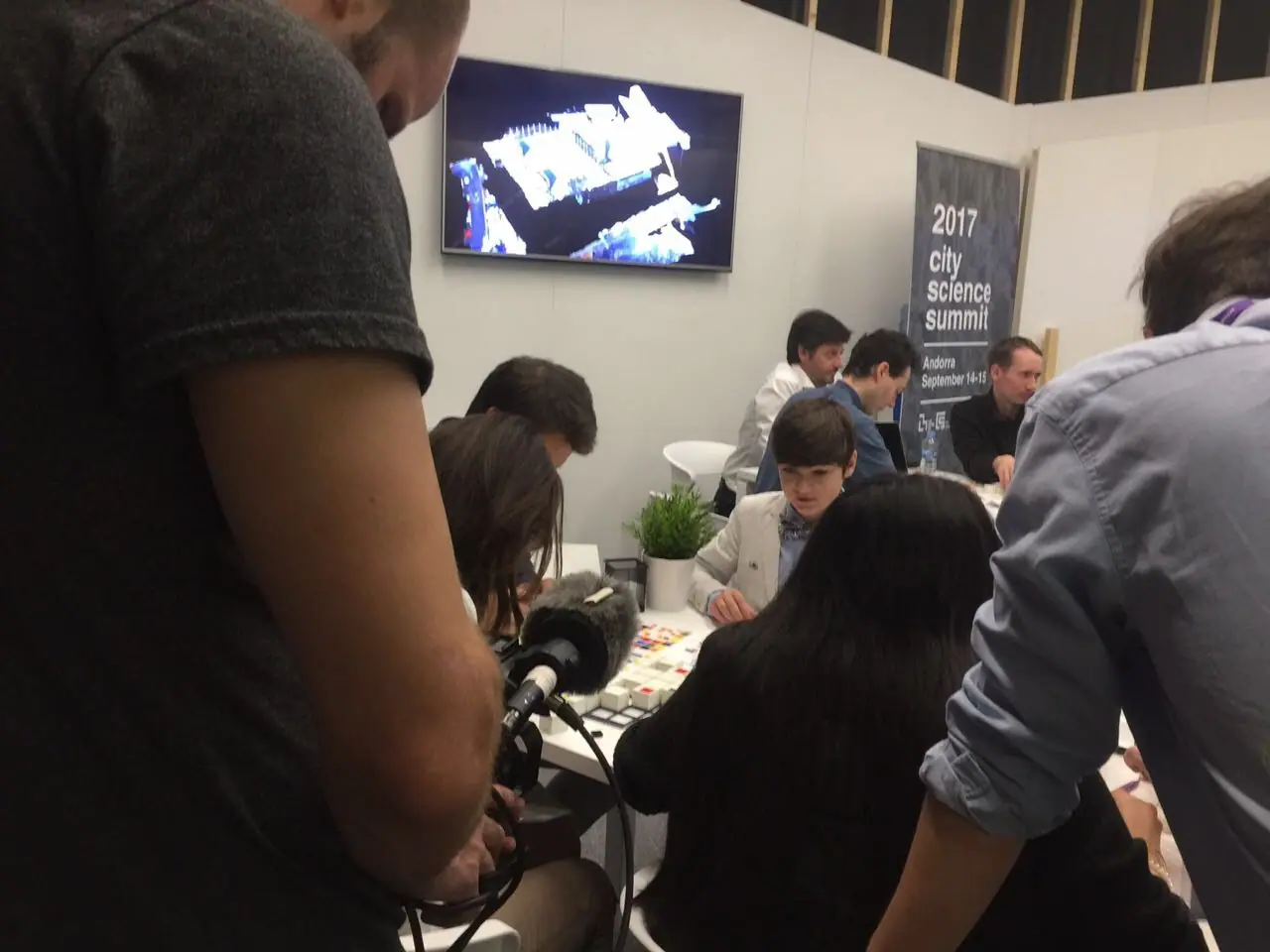
I was eleven at the 2017 City Science Summit in Andorra. I had started working with the City Science group in 2015.

The group had been working with Andorra since 2014. The country was its living lab: sensors in school classrooms, an interactive city table, and that summit.

In 2016 the group put TerMITes sensors in classrooms of the Escola Andorrana, with 95 pupils aged 10 and 11.

As a pupil in Andorra, I helped develop TerMITes, City Science’s classroom sensors.

Having admired the Media Lab from a young age

Marcel Bartumeu Ramentol · motivation letter
A boy in a light jacket and bow tie sits at a table of small coloured blocks, looking down at it, with adults around him; a camera microphone is in the foreground and a banner reads 2017 City Science Summit, Andorra, September 14-15.
FAMILY ARCHIVE · CITY SCIENCE SUMMIT, ANDORRA · 14–15 SEP 2017

9 YEARS

Nine years later I am a researcher in that group

Marcel Bartumeu Ramentol · my competition pitch, slide 6

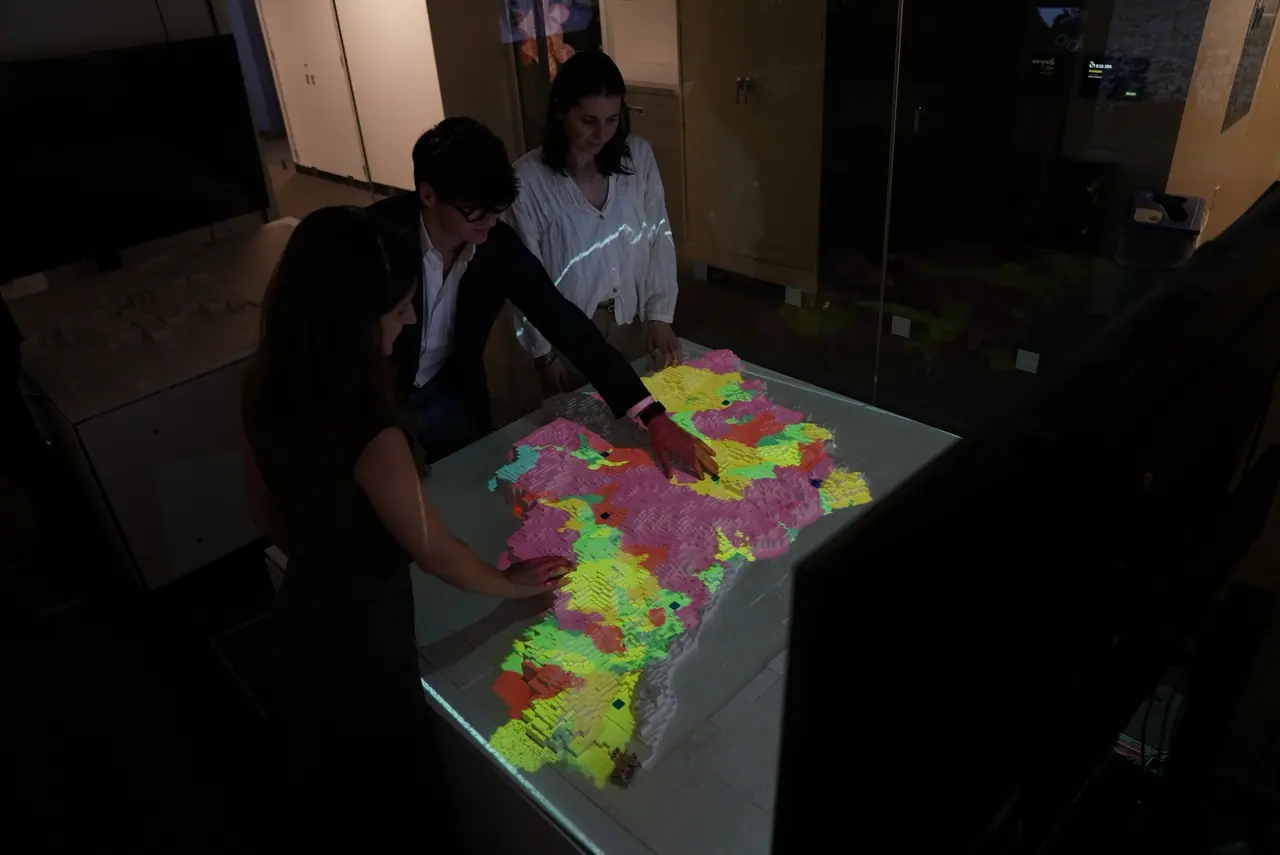
Today I work in that same group, on its Andorra project. I model the country I grew up in.

In a darkened lab, Marcel in a dark blazer and glasses reaches across a brick-built table model lit by a projected map in pink, yellow and green, while two women lean in beside him.
CITYSCOPE TABLE · MIT MEDIA LAB · 2026

02 BUILDING · FROM AGE TWELVE

Hands first

I create what doesn’t exist, focusing on high-quality products.

Marcel Bartumeu Ramentol · eTower introduction slide, February 2024

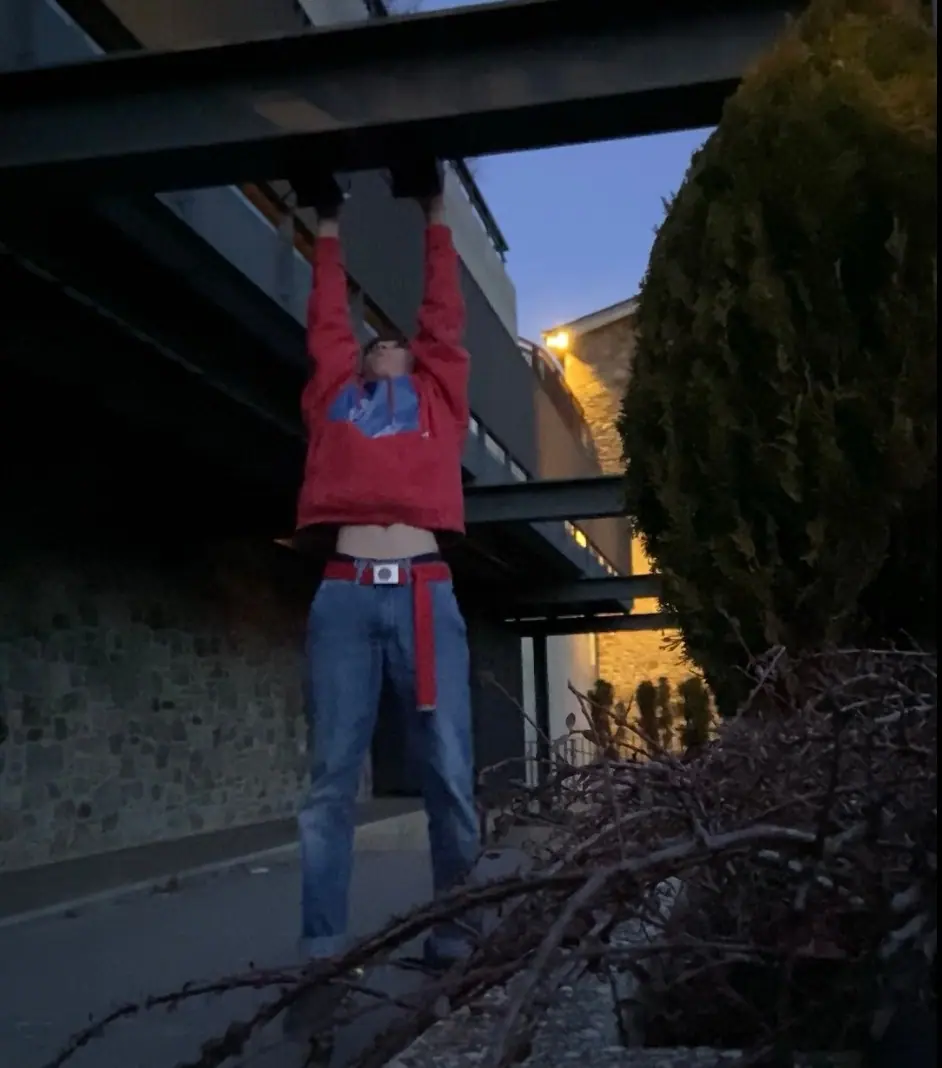
I bought my first 3D printer at twelve and started making physical things. One of them was a climbing device with electromagnets, because I wanted to be Spider-Man.

At dusk, Marcel in a red jacket and jeans hangs at full stretch under a steel beam, holding on by two black devices pressed against the steel; a stone wall and a lit building behind him, bare branches in the foreground.
THE ELECTROMAGNETIC CLIMBERS · ON A STEEL BEAM

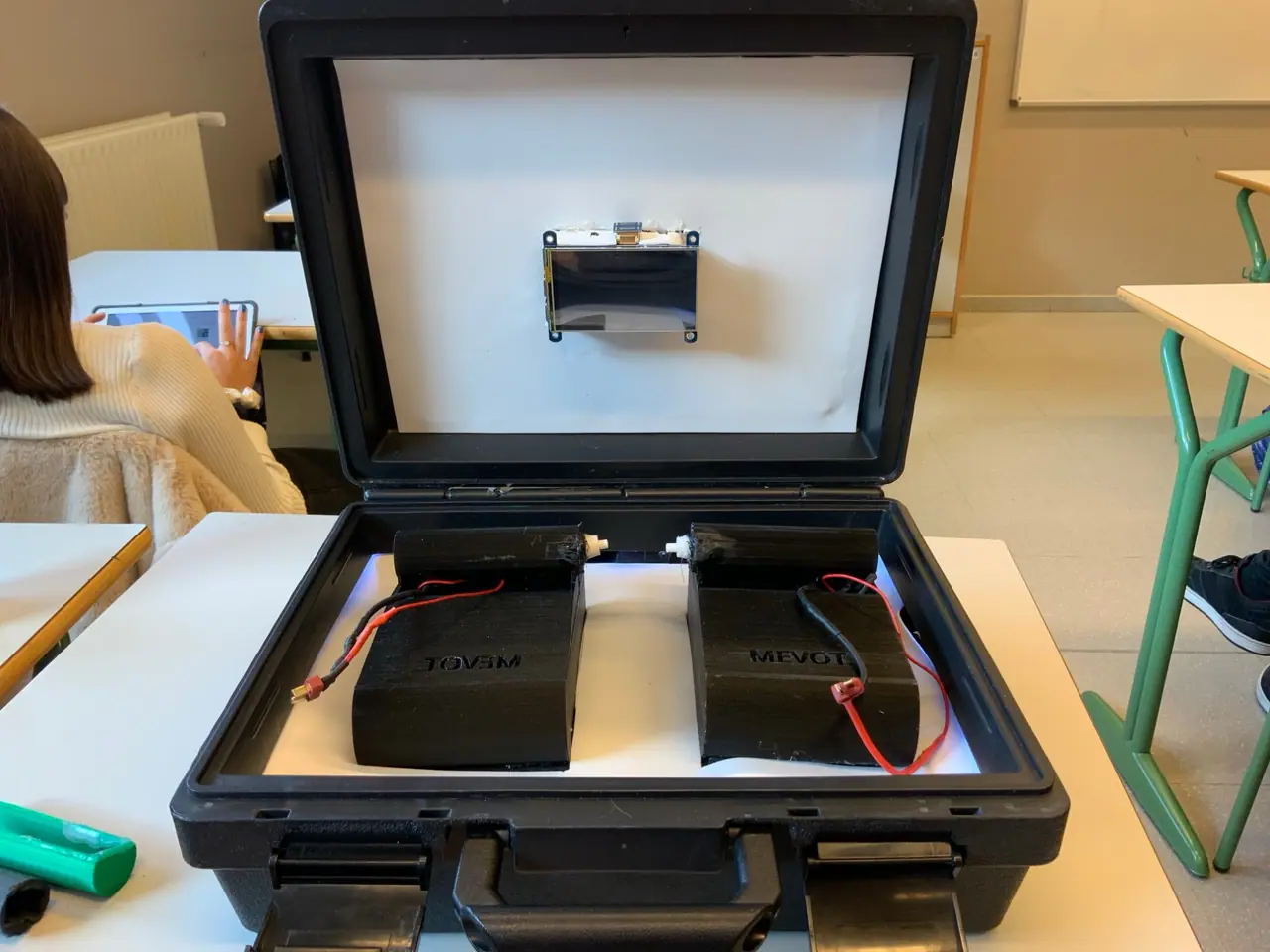
The prototype was a school project, printed in two halves.

An open black briefcase on a classroom desk: a small screen is fixed in the lid, and two black 3D-printed units lettered MEVOT, each with a short cylinder on top and red battery leads, sit in the base.
THE CLIMBING DEVICES IN THEIR CASE · SCHOOL PROJECT

At thirteen I built radio-controlled boats, cars and planes from scratch, and a device that did my laundry.

In the first COVID lockdown, at fourteen, my older brother and I made face masks, 3D-printed on my printer, and he delivered them (print files from 31 March 2020). Diari d’Andorra covered the masks. The article features my brother. That year I also wrote my first game in Unity, Space Cleaner, and put it on the App Store.

READ THE ARTICLE ↗

THE F1 RADIO-CONTROLLED CAR

An F1 radio-controlled car with a 3D-printed body.

3D-PRINTED BODY · RED POWER B3650 · 3215 KV BRUSHLESS

I printed the body and rear wing in green, fitted wide wheels, and put a brushless motor in it.

THE RACING DRONE

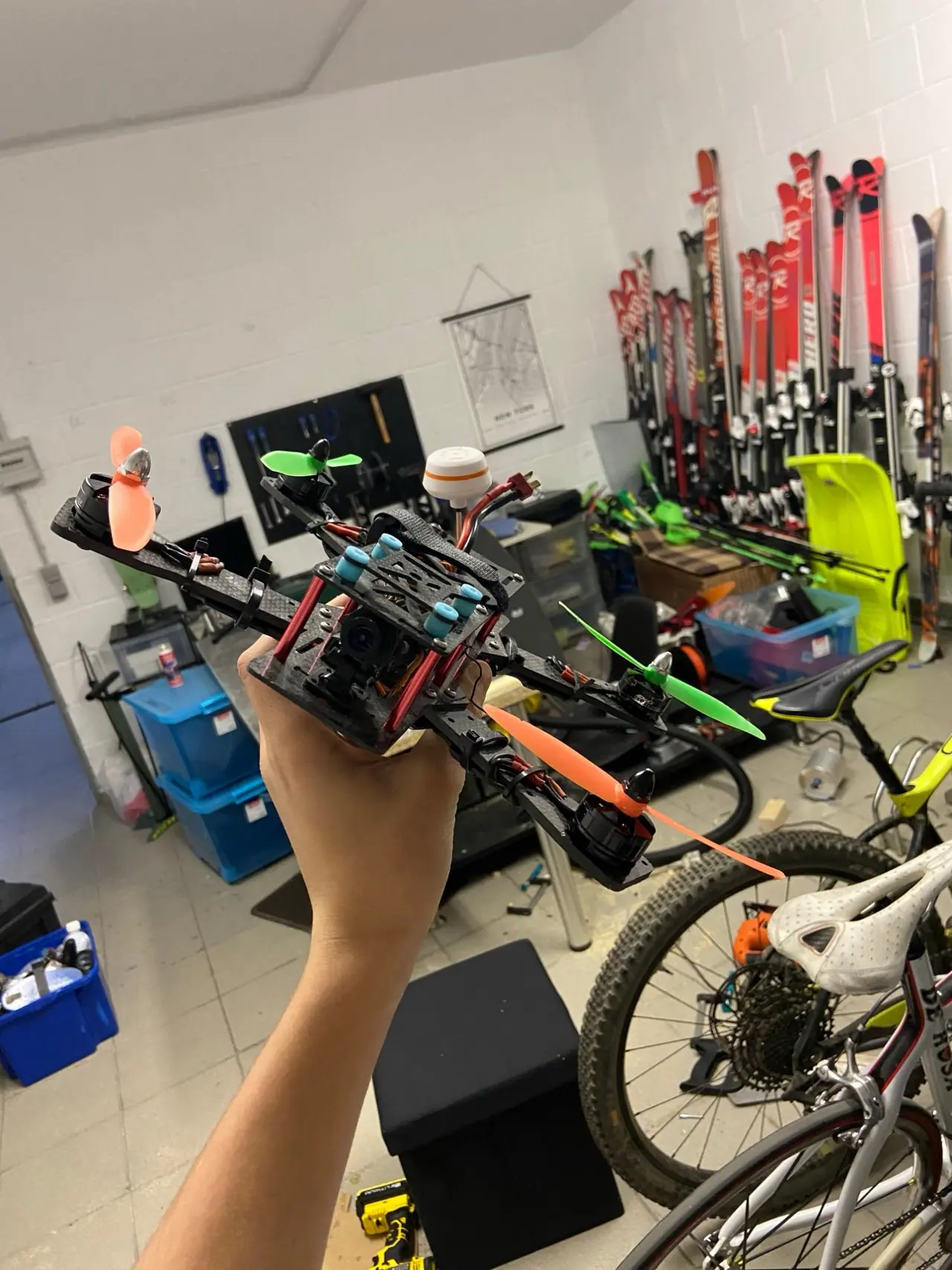
A racing drone I built for FPV flying.

250 MM CARBON X FRAME · 5 IN PROPS · 2200 MAH 3S LIPO

I built it on a 250-class carbon X frame: five-inch propellers, aluminium standoffs, silicone dampers, an FPV camera and a three-cell battery.

A hand holds up a racing drone with a carbon X frame, red standoffs, blue dampers, a small FPV camera and orange and green propellers, in a workshop with racks of skis, bicycles and storage boxes behind.
THE RACING DRONE · IN THE WORKSHOP

THE GO-KART

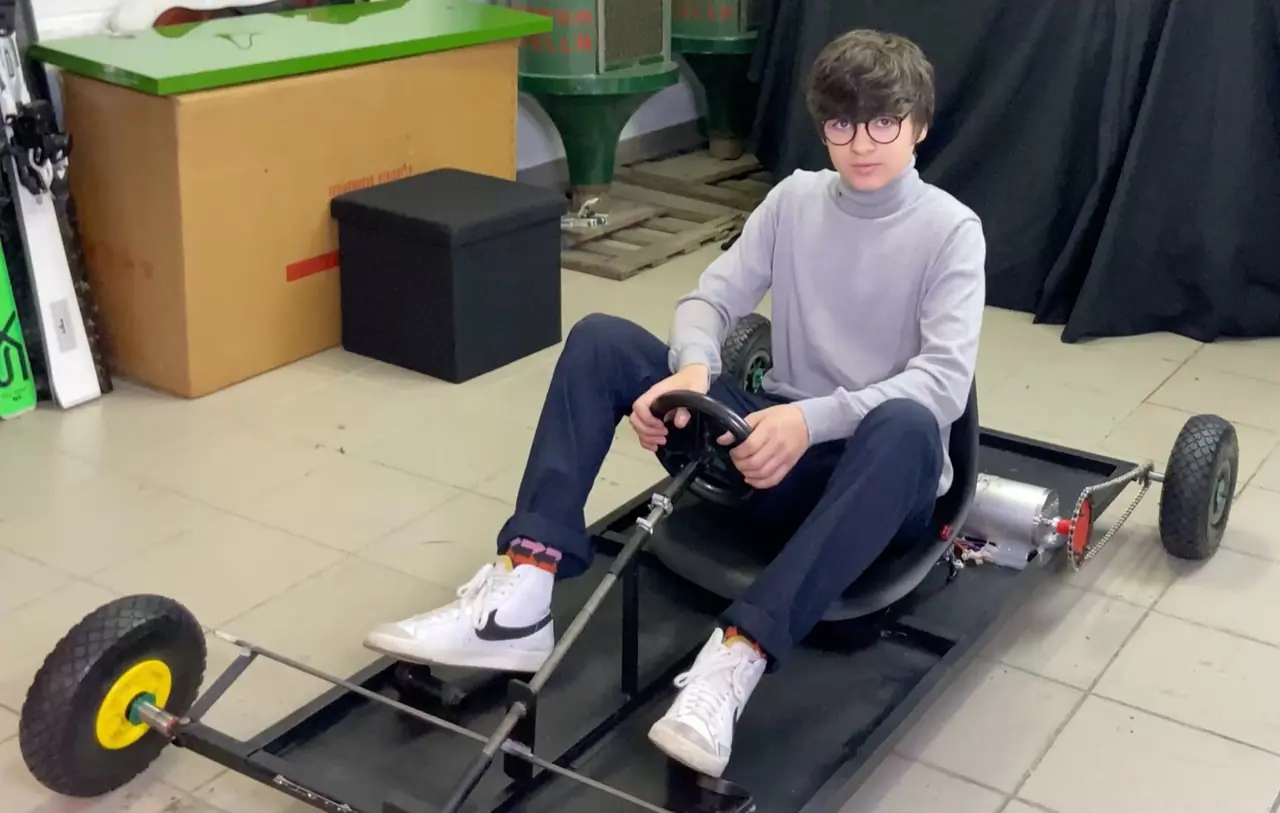
A 30 hp electric go-kart, built at thirteen and fourteen.

ELECTRIC GO-KART · BUILT AT 13–14 · 30 HP

A teenager in round glasses and a grey roll-neck sits at the wheel of an open electric go-kart: a flat black steel frame on four pneumatic tyres, a motor and chain drive at the back, on a tiled workshop floor.
THE FIRST BUILD · WELDED FRAME

I designed it and welded the steel frame myself, in our basement, then fitted a motor, a chain drive and printed drivetrain parts.

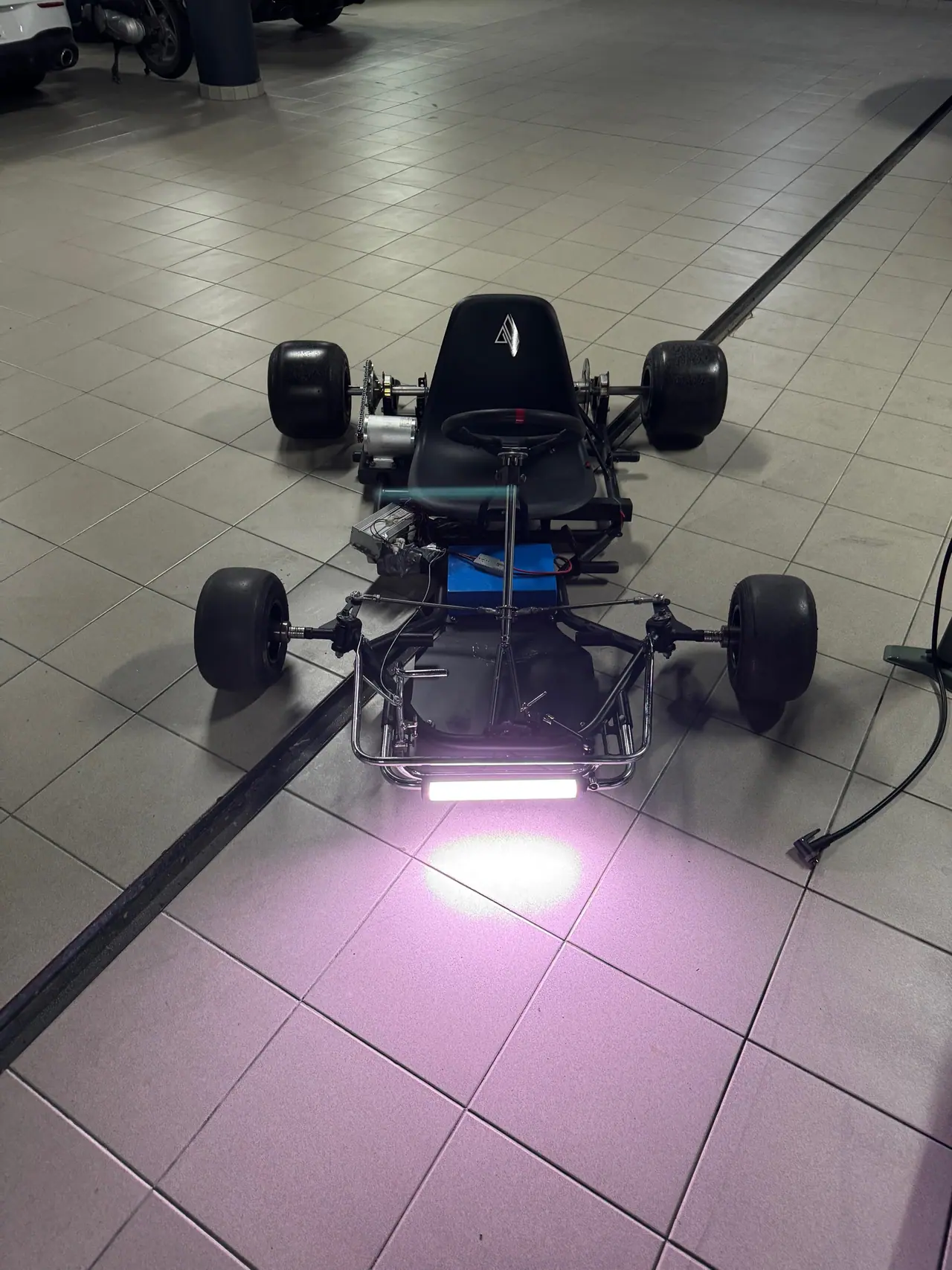
Marcel's electric go-kart in 2020, seen from the front on a tiled garage floor: slick tyres, a chrome nose bumper with a glowing LED light bar, a blue battery pack behind the steering wheel and a black racing seat.
ELECTRIC KART · 2020

Years later I kept developing it: in 2023 and 2024 I designed and 3D-printed motor mounts, a brake disc and spacers for it. I raced karts and Andorran hill-climbs.

The kart on screen is built from my own CAD model of it.

I started Mevot at fifteen, building electric longboards by hand and selling them. I designed the brand, the deck graphics, the packaging, and the industrial design of the charger and controller.

After creating my own e-board I realized there was a market to create and sell longboards to others.

Marcel Bartumeu Ramentol · my earlier CV

The motors, controller and battery came from a supplier’s platform. The brand, the deck graphics, the box and the manual were mine. Before the first batch I wrote a 29-page case study of how Boosted Boards collapsed.

Mevot grew to six figures in annual revenue. In 2025 I exited it through an agreement in which a manufacturing partner acquired part of Mevot’s designs.

Pesa poc. Arriba lluny.

Weighs little. Goes far.

Marcel Bartumeu Ramentol · Mevot MK2 product description
  • DESIGNED Battery enclosure Printed enclosures on the hand-built prototypes, 2021–2022; MEVOT BOX CARBON, 2024
  • MADE The model itself My CAD of the board (MK2)
  • DESIGNED Deck Deck shape and graphics; production decks made by the supplier
  • DESIGNED Brand and box Brand, die-cut box with GS1 barcode and FSC logo, manual
  • DESIGNED Controller and charger Controller and charger industrial design (design intent)
  • SOURCED Trucks, wheels, motors Supplier platform H2B-02: 2 × 450 W motors
  • SOURCED Battery Battery 36 V, 4,000 mAh, 144 Wh; UN 38.3 report issued to the battery supplier

03 SKI RACING · VERMONT · BABSON · ETOWER

Leaving at fifteen

Competition made me who I am. Sport taught me discipline, resilience, and perseverance.

Marcel Bartumeu Ramentol · October 2026

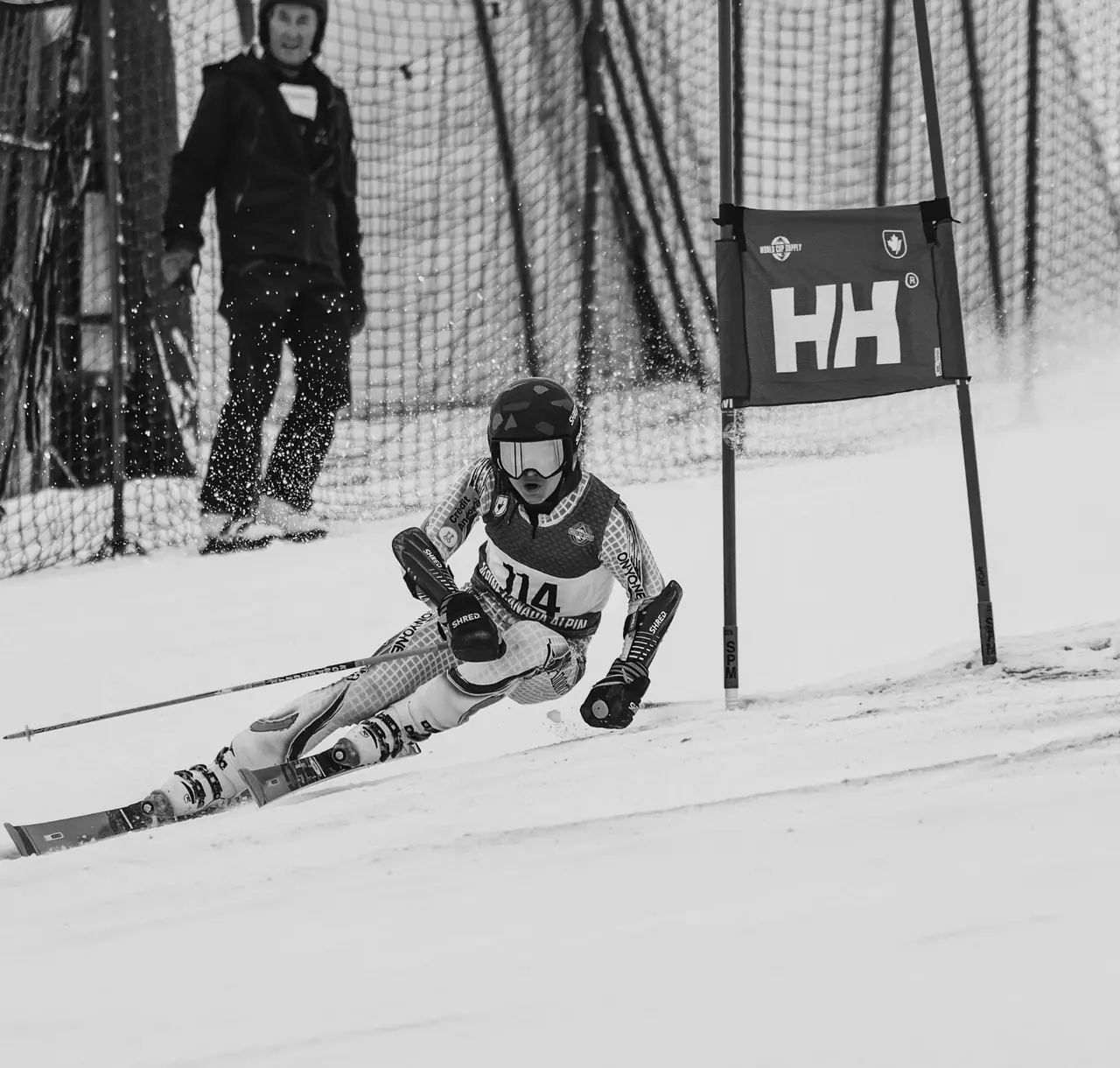
From the age of fifteen to eighteen, I competed at an elite level around the world as a member of the Andorran Ski Federation (FAE).

Black-and-white photograph of a ski racer in a bib leaning hard into a giant-slalom turn past a gate banner, while a course official watches from behind the safety netting.
GIANT SLALOM · CANADA

At fifteen I left Andorra and moved alone to a ski academy in Vermont, two months after starting Mevot.

Then Babson, with engineering at Olin. I raced two seasons for Babson’s men’s ski team, and from 2025 to 2026 I was President of eTower, Babson’s founder community. I’m still its advisor.

  • WAITSFIELD, VERMONT · 2021
  • BABSON COLLEGE, MASSACHUSETTS · 2023
  • MIT MEDIA LAB, CAMBRIDGE · 2025

Build the Tower. Build the network. Get capital and resources to the founders doing the work.

Marcel Bartumeu Ramentol · eTower semester report, spring 2026

04 MY WORK AT THE MIT MEDIA LAB

What if you could simulate a country 25 years into the future?

Four years after I left, I started to model it.

A budget, a tax reform, and a residency rule go straight onto a live population, with no rehearsal.

Marcel Bartumeu Ramentol · my vision document, July 2026

So I built a way to try them first. The Andorra Scenario Engine runs the country’s economy, population, housing, tourism, energy and environment to 2049 under four scenarios, calibrated on fifteen years of official statistics. It is published in Urban Science; I am the first of six authors.

YOUR TURN · MOVE THE YEAR · SWITCH THE FUTURE

Population follows the economy through a lagged labor-immigration link. In the September 2026 update that choice back-casts population worse than a straight line, 5.5% error against 1.7%, and I kept it, because a straight line has no lever a minister can pull.

small enough that a national-scale model can be built by a small team, and consequential enough that the model can actually inform policy

Marcel Bartumeu Ramentol · onboarding document for an intern
Signature numbers, 2024 and 2049, by scenario (figures updated September 2026)
2024ContinuityOvergrowthDegrowthDensity
Resident population87,097116,758175,07072,268117,810
Visitors per year millions9.6511.7617.467.5011.71
Electricity demand GWh/yr5707641,146473771
Hospital beds per 1,000 service population1.351.030.691.661.03
Summer water stress (WEI)0.1290.1650.2220.1220.166
Housing burden % of income17.516.516.516.316.9
CO2 kt/yr415440774263441
Natural land cover share0.9760.9670.9370.9760.976

Degrowth needs an explicit migration restriction. No calibrated setting shrinks the population from economic decline alone.

Continuity grows GDP by 2.5% a year, Overgrowth by 6.0%, Degrowth shrinks it by 1.5% with an explicit migration restriction, and Density grows it by 3.0% with no building expansion.

Population follows GDP through a lagged labor-immigration elasticity (0.40 at one year, 0.10 at two). 500 Monte Carlo draws. Outputs are mapped on a 12,474-cell H3 grid.

The grid’s 2024 base is 82,456 residents; the national series says 87,097. The terrain shows where growth lands, the national series how much.

Correcting the model moved three 2049 endpoints by under 4%, while Density rose 19% and now edges past Continuity.

Figures use the corrected model run (updated September 2026), which supersedes some values in the published article; a formal correction is in preparation.

05 THE PEOPLE · A SYNTHETIC POPULATION

90,000

This is the country-level layer. Underneath it are 90,000 synthetic residents.

Marcel Bartumeu Ramentol · Instagram carousel I designed, slide 5

Does making agents more human make a synthetic population behave more like the real one?

Marcel Bartumeu Ramentol · Media Lab application progress deck, slide 14

A synthetic population at national scale: 90,000 agents for a country of about 87,000 people.

A language model wrote 123 archetypes, for $9.55 in total. Deterministic code did the rest: 90,000 people in 40,520 households, 575,405 social ties, and a day of trips routed on the real street network.

Before I show you anything: Andorra gets about 9.6 million visitors a year. What share of its residents name tourism among the country’s top three concerns?

The second test was pre-specified and hash-locked in my repository before a single run, an internal pre-registration. I ran it once, on 8 September 2026. Housing tenure matched (TVD 0.003). Economic self-assessment missed on all six items.

Then I renamed the country.

  • ANDORRA
  • CANILLO
  • ENCAMP
  • ORDINO
  • LA MASSANA
  • ANDORRA LA VELLA
  • SANT JULIÀ DE LÒRIA
  • ESCALDES-ENGORDANY

The honest answer to the question at the top is still partly no – structure transfers and dispositions do not yet.

Marcel Bartumeu Ramentol · speaker notes, progress deck slide 14

Every generated field carries one of four evidence licenses, so an assumption cannot be read downstream as a measurement.

Marcel Bartumeu Ramentol · unsubmitted method draft

Only four constructs in the whole schema can be checked against real surveys at all. The synthetic unemployment rate is 9.63%; the official one is 2.0%.

06 ELSEWHERE · SAME PIPELINE, OTHER PLACES

I ran the same pipeline on the Media Lab’s own neighborhood.

Pointed at Kendall Square, the same code built 118,403 residents in 564 populated cells of Cambridge, and 141,368 inbound commuters, without tuning any constant to the outcome it is scored against. Its reference run misses the census work-leg mode split by 29.4 points. It gets mean travel time within a tenth of a minute: 25.9 against 25.8.

Every one of them is synthetic. The map shows how many live in each cell, never a person.

Adding another place requires a new pack and compatible assets, not an engine fork.

Marcel Bartumeu Ramentol · world-pack README

MAP DATA · OPENSTREETMAP (ODBL) · MBTA GTFS · U.S. CENSUS

SATELLITE IMAGE · USDA NAIP 2023 VIA USGS · PUBLIC DOMAIN

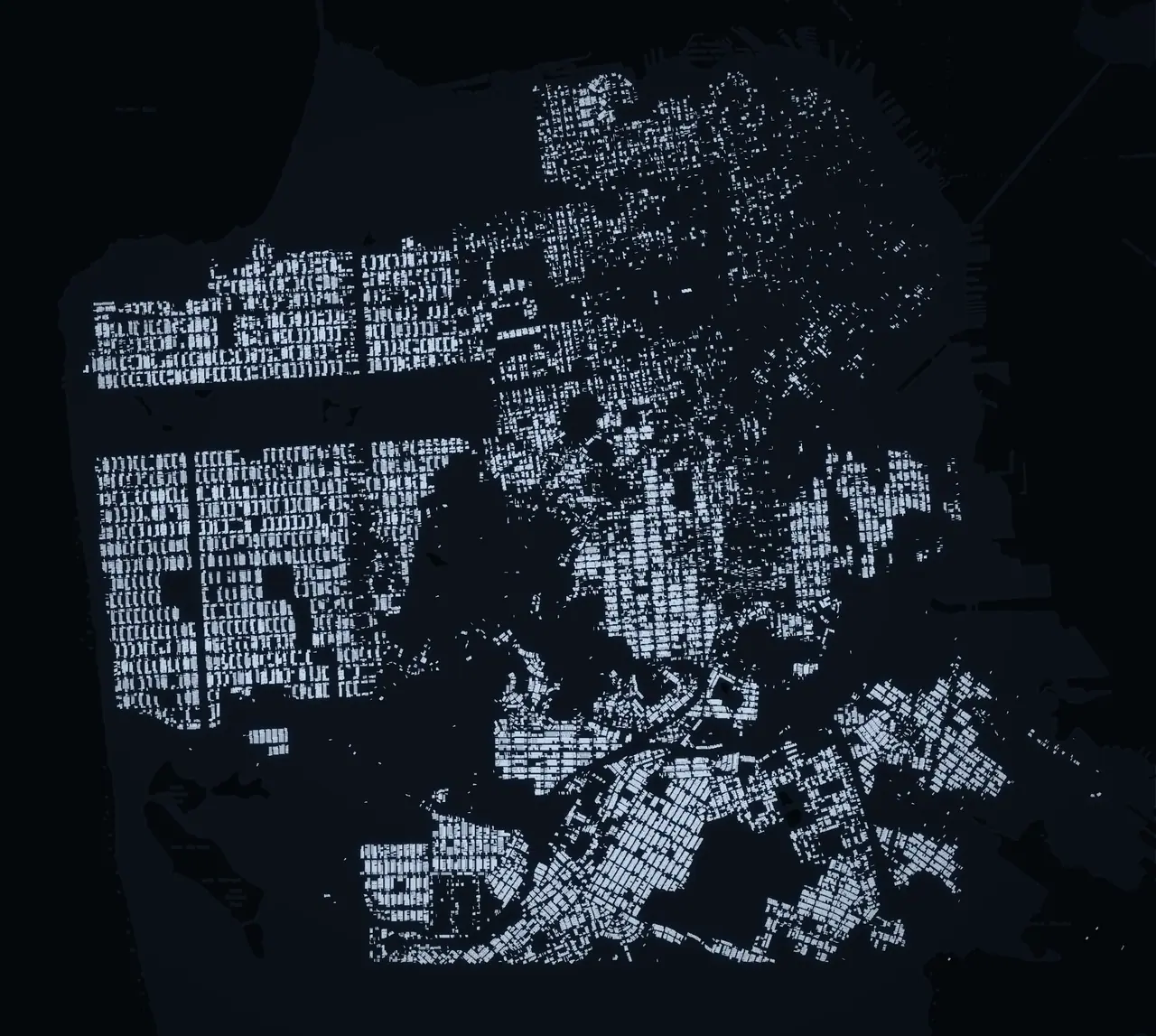
Night-toned map of San Francisco in which thousands of small residential lots, flagged by Marcel's small-lot explorer, glow as pale blocks on the dark outline of the city.
MY SMALL-LOT EXPLORER · SAN FRANCISCO
Parcel data: SF Open Data

In a week in May 2026 I also measured San Francisco’s lots: 63,119 of 189,636 residential-zoned lots fit the small-lot band that single-stair reform would unlock.

LIVE MAP ↗

A third place is in progress. Its population has not been generated.

07 THE DEMONSTRATION · TABLE, SCREENS, PANEL

Demos are arguments

Demos are arguments.

Marcel Bartumeu Ramentol · internship reflection

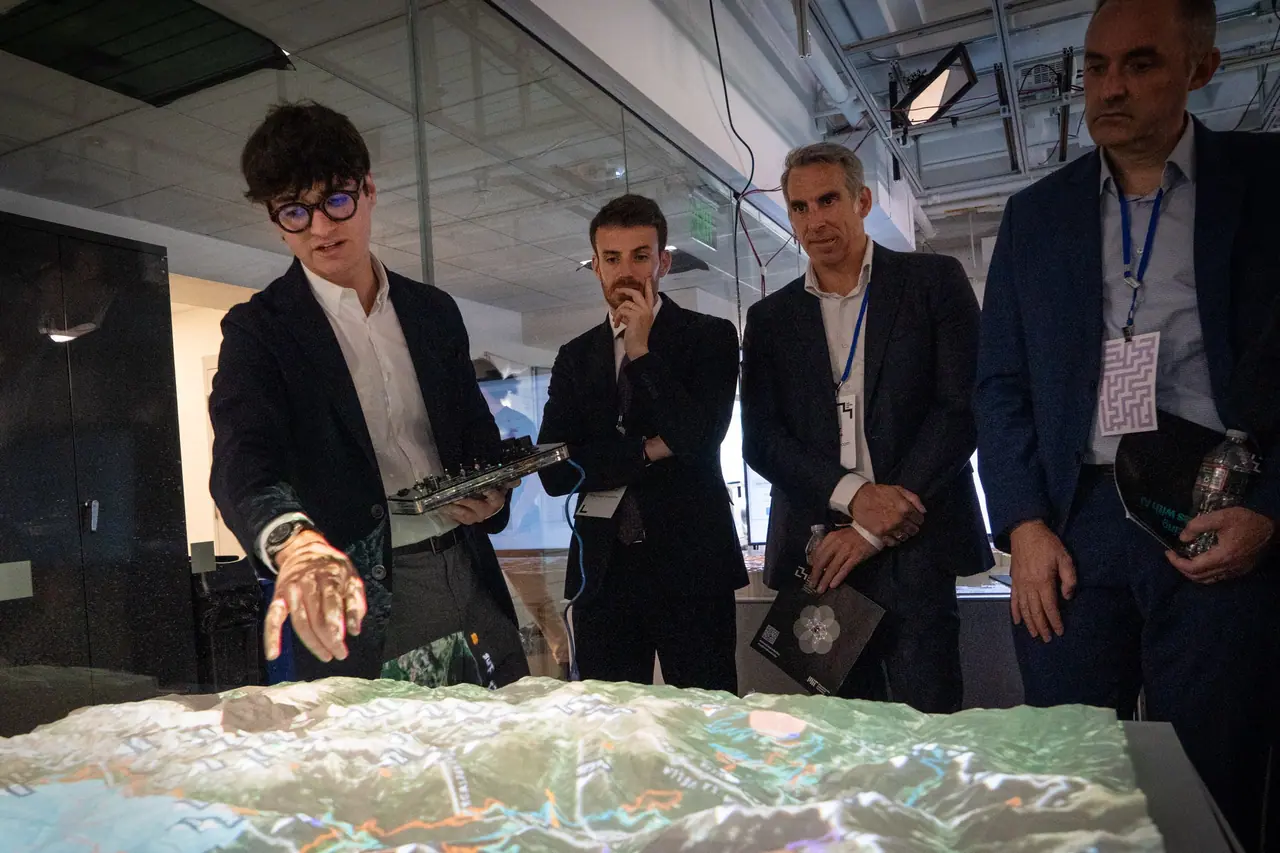
A model on a laptop is read by one person at a time. I built this one to be stood around: a terrain model of Andorra with the scenarios projected onto it, a wall of screens with the indicators behind it, and a control panel in the hand of whoever is asking the question. Move a fader and the country on the table changes for everyone in the room.

The terrain model is about 1.2 meters square, with the dashboard projected onto it and calibrated to four corner coordinates.

The panel is one part of it, and you have been using it. In November 2025 it was an Arduino with four buttons and one potentiometer. By April 2026 it was a Mega 2560 with two encoders, two faders, six buttons and five toggles, speaking JSON over Web Serial. Every control on this page sends the same messages.

The panel cost $109.18 in parts and was built for the delegation visit.

  • 2× EC11 ROTARY ENCODER WITH PUSH
  • 2× 10K SLIDE POT · YEAR 2010–2049 · ZOOM STREET → COUNTRY
  • 6× PUSH BUTTON · TABS
  • 5× TOGGLE · SCENARIO OVERLAYS
  • ATMEGA2560 CONTROLLER · 16 MHZ
  • JSON · 115,200 BAUD
READ THE PROTOCOL
{"type":"status","value":"ready"}                       heartbeat at start and every 5 s
{"type":"year","value":2027}                            A0, 2010-2049, only on integer change
{"type":"zoom","value":"Parish"}                        A1: Street | Block | Parish | Valley | Country
{"type":"encoder","id":1,"direction":"CW","position":4} ENC1, map layer; position may be negative
{"type":"encoder","id":2,"direction":"CCW","position":3} ENC2, agent hover
{"type":"encoder_btn","id":1}                           ENC1 push, simulation on/off
{"type":"encoder_btn","id":2}                           ENC2 push, confirm selection
{"type":"tab","value":"social"}                         main | economic | social | environmental | infrastructure | agents
{"type":"toggle","scenario":"overgrowth","state":true}  historical | overgrowth | degrowth | continuity | density

On 1 May 2026 a delegation from Andorra’s government came to the Media Lab. I ran the model for them live, at this table, with the panel in my hand.

A minister doesn’t care about your RMSE. A 3D-printed terrain model they can walk up to changes the conversation entirely.

Marcel Bartumeu Ramentol · internship reflection
Marcel, in a dark blazer and round black glasses, holds the hand-built control panel in one hand and reaches toward the projection-lit relief model of Andorra while three members of the Andorran delegation look on.
DEMO TO THE ANDORRAN DELEGATION · MIT MEDIA LAB · 1 MAY 2026
Photo: gbila

08 ROUND 2 · WHERE I’M WRONG

Missed gates

A negative result that is correctly measured is a contribution. A positive result that is a measurement artifact is a liability.

Marcel Bartumeu Ramentol · onboarding document for an intern

In racing, a missed gate is on the record and everyone sees it. I keep my research the same way.

ROUND 2 · 24 ITEMS · 5 PASSED · 12 MISSED (6 NOT EQUIVALENT, 6 OUTSIDE POLICY TOLERANCE) · 7 NOT SCORED (1 INCONCLUSIVE, 4 DESCRIPTIVE ONLY, 2 UNLICENSED)

No verdict rule, prompt, model, matching or population parameter was changed after seeing any result.

Marcel Bartumeu Ramentol · Round 2 findings

JUL 2026 · MY OWN ENGINE

Claimed
Four futures.
Measured
A capital letter sent all four scenarios down the same branch, and the Monte Carlo returned identical p10, p50 and p90.
What I did
Fixed both, pinned them with golden-master tests, and wrote the failure into the same document as the results.

JUL 2026 · ROUND 1

Claimed
A faithful population.
Measured
81% vs 1% on tourism.
What I did
Wrote it up as a fail and rebuilt the archetypes.

JUN–JUL 2026 · PEER REVIEW

Claimed
A digital twin, in the title.
Measured
A reviewer argued the system was a scenario engine, not a digital twin.
What I did
My co-authors and I agreed and retitled the paper The Andorra Scenario Engine. The abstract now says: an upstream, auditable layer toward a national digital twin rather than a forecasting system.

8 SEP 2026 · ROUND 2

Claimed
A population inside the tolerances I fixed before the run.
Measured
12 of 24 items missed.
What I did
Reported all 24 items, the misses first.

09 NOW · AS OF 31 October 2026

Now

Everything above this line happened. Everything below it is a model.

CHOOSE A LINE

Do dispositions grounded in local survey data reproduce how residents rank their country’s concerns in a second place, without retuning?

sha256 54ec8e42 · DEPOSIT: NOT YET

Can trips derived only from profiles, census, streets and timetables come within a pre-declared tolerance of held-out phone data?

sha256 54ec8e42 · DEPOSIT: NOT YET

Does operating a simulation together, on a physical table, change how a group reasons about a policy, compared with reading the same results on a screen?

sha256 54ec8e42 · DEPOSIT: NOT YET

Applying to the MIT Media Lab master’s programme to keep building synthetic societies.

Marcel Bartumeu Ramentol · Media Lab application progress deck, slide 15

building tools that help imagine and test better futures, and then helping turn the best ideas into reality

Marcel Bartumeu Ramentol · fall 2025 reflection
  • Synthetic Agent Generation Pipeline (working title): the methodology and architecture for generating realistic synthetic populations.
  • Mobility Validation Against Telecom Data (working title): validating simulated agent movements against real-world telecommunications data. The comparison has not been run yet.
  • Public Opinion Validation Against Surveys (working title): comparing synthetic agents’ opinions and responses against actual survey data. The Round 1 and Round 2 findings reported on this site are its evidence.

10

Credits

RESEARCH
City Science, MIT Media Lab. Supervision: Kent Larson, with Luis Alonso.
THE ANDORRA SCENARIO ENGINE (URBAN SCIENCE, 2026)
Marcel Bartumeu Ramentol, Parfait Atchade-Adelomou, Adrian Mora-Carrero, Kent Larson, Luis Alonso-Pastor, Marta Domenech (Andorra Research + Innovation).
h-ABM BEHAVIOR ENGINE · SOURCED
City Science team (TechRxiv preprint: Mora, Atchade-Adelomou, Alonso-Pastor et al.). My part: the coupling, identification checks and outcome memory.
PARTNER
Andorra Research + Innovation.
DATA
Official Andorran statistics and inventories (Departament d’Estadística and the other sources cited per series in the source drawer), Observatori d’Andorra survey aggregates (no microdata), OpenStreetMap contributors where streets are drawn, and the San Francisco Assessor parcel map.
MAPS AND DATA LICENCES
Street geometry © OpenStreetMap contributors (ODbL). Globe land: Natural Earth 1:110m (public domain). Globe idea after Three.js Interactive Vertex Earth (Bobby Roe, MIT licence); rewritten, no code copied.
KENDALL SQUARE WORLD · DATA
A synthetic population of the City of Cambridge, Massachusetts, which I built in 2026; every person in it is fictional. Census geography: U.S. Census Bureau. Street and path geometry © OpenStreetMap contributors (ODbL). Transit timetables and shapes: MBTA GTFS.
THIS SITE
Design and code: Marcel Bartumeu Ramentol. Type: the system’s SF Pro where the device has it, otherwise Inter; Syne and Instrument Serif (both SIL OFL, self-hosted). three.js, GSAP, Lenis.
COLOPHON AND CHANGELOG
The colophon, the changelog and the claims count are on the credits page.
EMAIL · MIT EMAIL · PERSONAL GITHUB ↗ ORCID ↗ MIT PROFILE ↗ CREDITS, COLOPHON, CHANGELOG →

Help · keyboard

This page is an instrument. Scroll to move through it; every control also works from the keyboard. The reading depth decides how much evidence each chapter shows.

Keys

Next / previous chapter
JK
Year (Shift: ±5)
←→
Scenarios
1234
Historical series
H
Reading depth
-=
Licence lens (Street)
L
Layer dial
[]
Focus dial
,.
Open focused item
Enter
Index
I
Tour
T
Panel
P
This help
?
Close
Esc

Preferences